

1880
— 1890
In the beginning
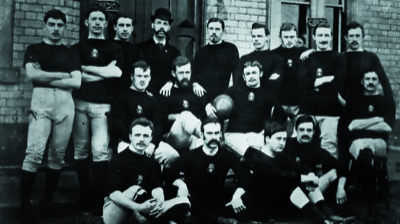
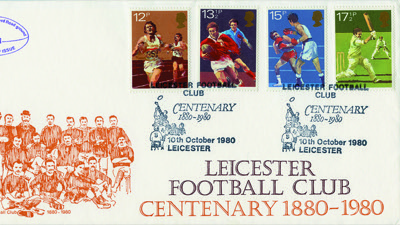
The Leicester Football Club was formed from an amalgamation of three clubs – Leicester Societies AFC, Leicester Amateur FC and Leicester Alert – at the George Hotel in Leicester on August 3, 1880 and staged it first match just 12 weeks later.
An inauspicious debut fixture against Moseley ended 0-0 at the Belgrave Cricket and Cycle Ground on October 23, with Leicester adopting black as the club colours and becoming known as “The Death or Glory Boys”.
The team’s home ground alternated between Victoria Park and Belgrave until the decisive move to Welford Road in 1892, with the current site opened with a game against a Leicestershire Rugby Union side which the hosts won 17-0.
By that stage, the ‘Tigers’ nickname had already appeared, with the earliest reference in the Leicester Daily Post on February 21, 1885 in a report stating “the Tiger stripes were keeping well together.”
The first glimpse of the famous scarlet, white and green colours came in 1891, in stripes at first and then, from 1895, in hoops as the club as we know it now began to take shape.
Leicester reached their first Midland Counties Cup Final in April 1889, losing to Coventry. But they returned to win their first silverware in 1898, beating Moseley 5-3, before extending their winning run over the next seven seasons until withdrawing “to give other teams a chance”.
The hunger for success, though, had taken hold from a very early age.
1890
— 1914
Kings of the Midlands
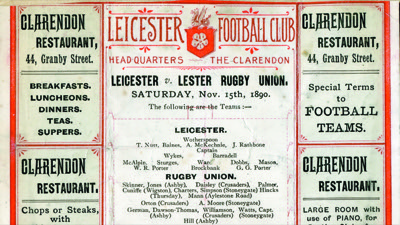
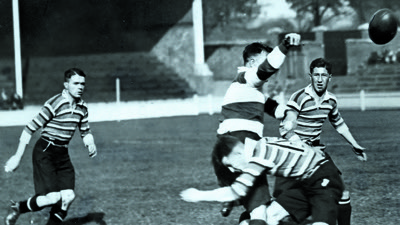
Leicester started the 20th Century as the leading club in the Midlands, winning the Midland Counties Cup eight times in succession up to 1905, while Welford Road marked its 10th anniversary as the team’s home by hosting its first international fixture in February 1902, with England beating Ireland 5-3.
By 1903, Jack Miles became the club’s first international player, creating a pathway for many others to follow.
The great Tom Crumbie had taken over in the all-encompassing role as Honorary Secretary in 1895, a position he retained until his death in February 1928. He presided over a successful period and laid many of the foundations upon which the club built in the following century.
Crumbie introduced the concept of invitational sides, which led to many of the era’s greatest players donning Tigers colours and helped to provide the impetus for the development of Welford Road as the stadium regularly welcomed gates of more than 10,000.
Leicester met their first touring team, the All Blacks, in 1904 and in 1906/07 seven of the club’s top players played in an East Midlands XV against the touring South Africans.
The name of the Leicester club began to travel far and wide, with John Jackett, Fred Jackson and Tom Smith becoming the first players to join an overseas tour when they were selected for an Anglo-Welsh party (a forerunner of the British & Irish Lions) for the trip to Australia in 1907/08.
The new clubhouse, which finally brought the dressing rooms inside the ground, was opened in 1909 and, in the same year, the Barbarians made their first visit to Welford Road in the Christmas period, with their debut fixture ending in a 9-9 draw. They had taken up a vacant spot after a regular fixture with Scottish team Fettes-Lorettonians was cancelled.
Sid Penny, a Tigers regular from 1896 to 1910, set a record mark for club appearances which would not be passed for more than 60 years.
After the outbreak of The Great War in 1914, Welford Road was used for military training while Tom Crumbie himself was responsible for recruiting 3,500 men to the Services.
1915
— 1938
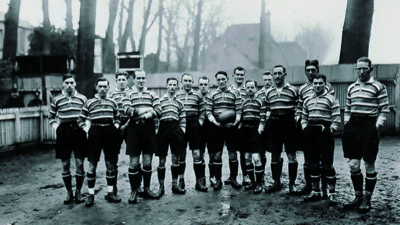
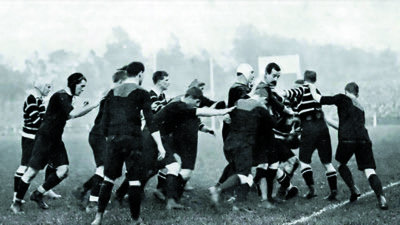
Driving forward
The First World War claimed the lives of 19 Leicester players, including England international Frank Tarr, before fixtures restarted at Christmas 1918 as the new Members Stand was officially opened for the first game in more than three years and on the same day Percy Lawrie overtook Harry Wilkinson as the club’s leading try-scorer. His final total of 206 tries remains unsurpassed.
A new stand (which became the Crumbie Stand) was opened on October 2, 1920 and terraces were added to the front of it a year later, while the extension of the Members Stand on the opposite side gave a seating capacity at Welford Road of 10,250.
At Christmas 1921, Tigers entertained their first French visitors, from the Racing Club de France (later to return to the top table of European rugby as Racing Metro and Racing 92). Leicester won 4-0 but then lost on their first trip abroad with the visit to Paris a year later.
England beat Ireland 25-3 at Welford Road in February 1923 in the last home international played away from Twickenham until 1992.
A year later an estimated crowd of 35,000 packed Welford Road to the rafters to show the attraction of a touring New Zealanders team led by C G Porter and known as the “Invincible” All Blacks.
The death of Tom Crumbie in 1928 saw Eric Thorneloe take over as Honorary Secretary and by 1930 Tigers had become radio stars with the first BBC broadcast from Welford Road as Leicester beat Waterloo 21-5.
Four players were selected to tour with the 1930 British Isles party, including captain Doug Prentice, and the following year a Leicestershire & East Midlands XV including seven Tigers inflicted the only defeat on the touring Springboks.
In another landmark for Tigers, Bernard Gadney became the first home-produced player to captain England in 1933 and he went on to lead a Triple Crown triumph.
Back at Welford Road, the Tigers forwards began wearing lettered shirts at the start of the 1926/27 season and in September 1931 a match against Bath saw the whole team lettered for the first time.
Harold Day became the first man to score 1,000 points for the club, but Leicester faced financial difficulties during the recession, and the sale of match programmes began as a way to raise funds alongside the birth of a Supporters Club in 1934.
Royalty, too, became a part of the club as a Russian Prince, Alexander Obolensky, made his debut in 1934/35 and in the following year enjoyed a standout performance for England with two eyecatching tries in defeat of the All Blacks with Gadney as his captain. By the time Obolensky became the first England international to be killed in the Second World War – when his Hawker Hurricane crashed during a training exercise – his name was already in English rugby folklore.
1940
— 1957
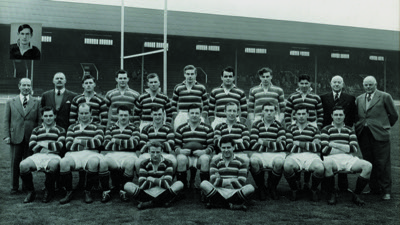
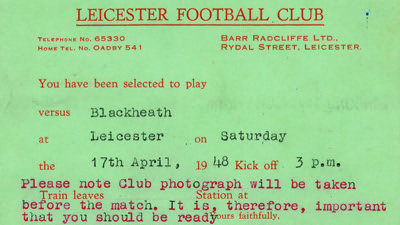
Back up and running
A Leicestershire Harlequins team, formed to provide games for servicemen passing through the county, helped to provide a basis for the post-war Leicester team with Tigers stalwarts Tom Berry and Cecil Beamish providing some stability and guidance.
The first peacetime fixture was in Cardiff in September 1945, with young forward Jerry Day beginning a period of service with the club which would stretch to nearly four decades.
The decision to field a second team proved a controversial one as local clubs felt disinclined to let their players go to play for what was still, in essence, an invitation club. A decision to launch an old players’ membership proved more popular and the qualification criteria based on 20 games for the senior team to earn a player’s tie is still in place.
By the 1950s, however, club president Billy Bradshaw warned that considerable economies would be required to tackle the debts in the face of falling attendances and the counter-attraction of county fixtures at weekends.
Tigers made a first TV appearance in a 14-0 win over London Scottish at the Richmond Athletic Ground in February 1951 and in another groundbreaking move Major Albert Chilton became the club’s first paid official, on a salary of £250 a year as general secretary as the club celebrated its 75th birthday.
1957
— 1971
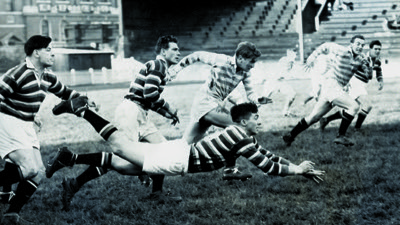
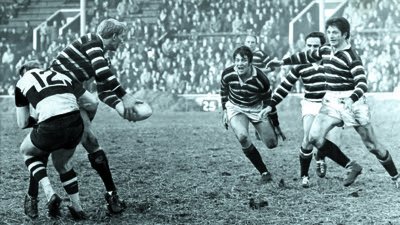
Planning for the future
Leicester approached the late 1950s with a fresh optimism, not least with the adoption of an Extra First XV and Swifts team to increase playing resources, while the increasingly important input of New Zealander Colin Martin played a central role in driving the team forward.
Martin provided quality on the field as a second-rower but was just as vital off it, identifying the need for better training and preparation, and then becoming coach alongside captain David Matthews by the mid-60s in a forward-thinking move which paid immediate dividends.
England fly-half Phil Horrocks-Taylor, a Lions tourist in 1959, and Ireland’s flamboyant Tony O’Reilly added their own class to the squad, while Matthews became such a consistent and influential figure that he would go on to set an appearance record for the club which will never be beaten.
The coaching role developed further when former scrum-half Chalkie White was invited to assist captain Graham Willars in 1968/69 despite a certain resentment from elements who thought players should work out how to play the game for themselves.
White saw himself as a visionary and became a pioneer as a coach. Players in the era swore a loyalty to him and his methods, and the results were there for all to see on the pitch.
1971
— 1981
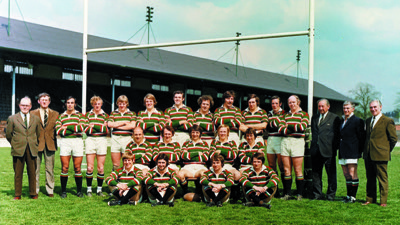
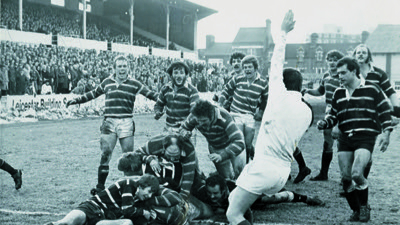
Tigers take over Twickenham
Peter Wheeler was a young hooker from Kent who landed on Leicester’s doorstep looking for a game in 1969. During the decade or so which followed, he captained club and country, sharing in Leicester’s biggest triumphs before enjoying similar influence as coach, administrator and director in an association with the Tigers stretching to almost half a century.
A fine all-round footballer, Wheeler became as vital to Tigers fortunes as coach Chalkie White and they were to enjoy some memorable victories together.
They couldn’t help Tigers to success in their first venture in the RFU national knockout competition, losing to Notts in the first round of 1971/72, but the trophy became a central focus in the club’s growth.
Two years later, David Matthews broke Sid Penny’s club appearance record with his 492nd game at Broughton Park and he took the total to 502 before finally hanging up his boots.
By 1978, Tigers were running out in a Cup Final at Twickenham. Though they lost to Gloucester on that occasion, Wheeler did get his hands on the silverware in a return visit a year later and Tigers went on to win the competition, then known as the John Player Cup, for three successive years – with final wins over Moseley, London Irish an d Gosforth. They kept the trophy too at the end of the tobacco company’s sponsorship.
The names of Paul Dodge, Clive Woodward, Dusty Hare, Garry Adey, Les Cusworth, Steve Kenney and Ian ‘Dosser’ Smith joined Wheeler among the all-time Tigers legends.
Another landmark arrived with full-back Hare overtaking Harold Day’s points record for the Tigers and, to honour the centenary of the club’s foundation, Leicester become the first English club to embark on a tour to the southern hemisphere, playing six games in Australia and Fiji.
1982
— 1990
Top of the league
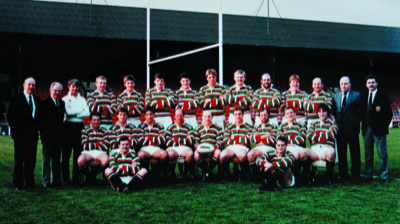
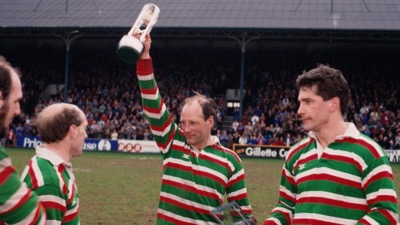
The 1980s brought the advent of national league competition, with Leicester Tigers becoming the inaugural Courage League champions in 1987/88 with long-serving centre Paul Dodge as club captain.
Dodge, one of the earliest graduates from the club’s youth team, had been in the senior squad for more than a decade and had already captained England before Tigers became the first national league champions, sealed with a 39-15 victory over Waterloo at Welford Road. Tigers had lost just once – at Orrell – in the 10-game league programme.
The belief and structure needed to win the title could be traced back to the John Player Cup run of 1979-81, with Dodge, Les Cusworth, Dusty Hare and Steve Kenney still involved alongside rising new talent led by Dean Richards, Rory Underwood, John Wells and Barry Evans.
By the mid-80s, Tigers could boast a club record seven players in the England team to face Ireland at Twickenham, while hooker Peter Wheeler continued a glorious career with captaincy of the Midlands in famous wins over Australia and New Zealand before helping to steer Tigers to that first league title as a coach.
Development at Welford Road continued too with new changing rooms, medical and weights rooms opened under the Crumbie Stand as well as work at the Clubhouse End, while further signs of a bright future came with a debut for young lock Martin Johnson in a fixture against the RAF.
As the ’80s came to a close, however, old rivals Bath denied a winning send-off for Dusty Hare – by then rugby’s points-scoring world record holder – as Tigers were beaten in the 1989 Cup Final in front of a then-world record crowd of 58,000 at Twickenham.
1990
— 1997
Brave new world
A new era dawned with the appointment of schoolmaster Tony Russ as the club’s first full-time coach in 1990 as Leicester addressed the increasing burden on amateur administrators. Officials remained amateur and club members still served on various sub-committees, but Russ would oversee the rugby operation.
There were changes of the guard on the field, too, with long-serving Les Cusworth, Paul Dodge and Steve Kenney following Dusty Hare into retirement.
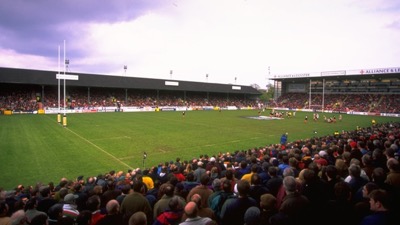
Welford Road became a World Cup venue in 1991 with New Zealand beating Italy at the home of the Tigers and a year later the famous stadium’s centenary was celebrated with fixtures against an England XV, a Leicestershire XV and Italian visitors Amatori Milan.
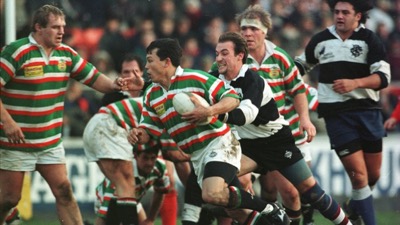
Twelve years on from their last win at Twickenham, Tigers lifted the Pilkington Cup with defeat of Harlequins in the 1993 Final, and a new and ambitious core to the team promised even greater things with a league title in 1995 and another cup win two years later.
With rugby now entering its professional era, and with Australia’s World Cup-winning coach Bob Dwyer appointed as director of rugby, Tigers reached the European Cup Final at the first attempt in 1997, though a fairytale ending was denied when they were beaten by French side Brive.
A record six Leicester players were named in the 1997 Lions squad to tour South Africa, with Martin Johnson as captain.
Later that year, Leicester Tigers became a public limited company after a successful share issue and Peter Tom became Chairman of the board.
Big things were indeed happening in English rugby as former Tigers centre Clive Woodward was appointed national coach.
1998
— 2007
Europe and the world
An iconic figure on the pitch, shirt blowing the breeze, socks around his ankles and a presence on the pitch which just seemed to attract the ball, Dean Richards spent 17 years as a Leicester player before becoming director of rugby in 1998 with the departure of Bob Dwyer. It was the dawn of a new golden era in the club’s history.
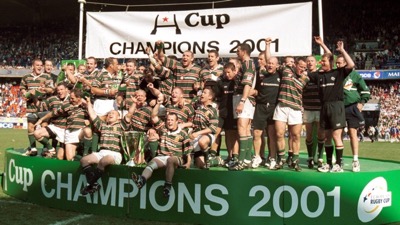
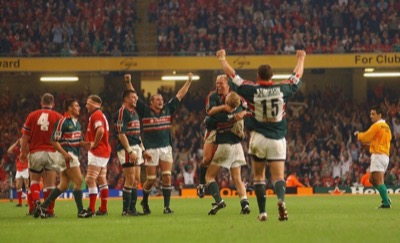
By 2003, Richards had led his team to seven trophies. Tigers, with Martin Johnson as captain, won four successive league titles from 1999-2002, were crowned kings of Europe in 2001 and 2002, and for good measure also added a Zurich Championship when the authorities decided to add a play-off to the end of the league season.
Tigers supporters turned Paris red, white and green for the European Cup Final of 2001, won with a late try from Leon Lloyd and conversion from full-back Tim Stimpson, on an afternoon that will live forever in the memory of all those involved.
The name of Leicester Tigers spread far and wide as Welford Road hosted a World Cup fixture for a second time in 1999, with Tonga securing a win over Italy.
Skipper Johnson became one of the great figures in the game, becoming the first man to lead the British & Irish Lions on two tours as they landed in Australia in 2001, and two years later he lifted the Rugby World Cup as England captain.
With former Tigers centre Clive Woodward – Sir Clive after the World Cup win – as coach, England included seven Tigers in the squad which lifted that Webb Ellis trophy after victory over hosts Australia, also coached by a former Leicester player in Eddie Jones who made a handful of appearances at hooker during a brief stay in the 1990s.
On the back of the World Cup win, rugby had never enjoyed such a high profile and tens of thousands of supporters welcomed the squad home, while Tigers reported record season ticket sales of more than 11,000.
Richards, after 23 years at the club, left in January 2004, with his former back-row colleague John Wells taking up the reins as head coach, while Pat Howard and Richard Cockerill returned from France to join the coaching team.
2007
— 2017
Sustained push for success
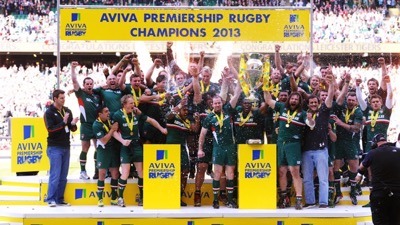
From topping the league and Europe, Tigers went five years without a trophy from 2002, but then they made 2006/07 a season to remember under Pat Howard, winning the first league-and-cup double of the professional rugby era and just missing out on a remarkable treble as they were beaten in the European Cup Final at the end of a mammoth season.
Former centre Howard had returned to the club as head coach, working in a coaching team with other former Tigers players Richard Cockerill, Neil Back and Graham Rowntree as they chased a return to the glory days at the turn of the century. In his final season before returning to Australia, Howard has taken Tigers to the verge of the greatest prize of all.
After a thrilling Anglo-Welsh Cup Final win over the star-studded Ospreys, Tigers overwhelmed Gloucester 44-16 in the Premiership Final on their return to Twickenham. A week later the Tigers faithful returned to HQ but the teams fell just short as London Wasps claimed Europe’s biggest prize.
The players and the fans had to wait just two more years before reaching a fifth European Cup Final, coming through an historic penalty shoot-out against Cardiff Blues at the Millennium Stadium in the semi-finals to meet Leinster in Dublin. This time just three points separated the teams with the Irishmen lifting the trophy for the first time.
After looking overseas for successors to Howard, Tigers welcomed former Argentina boss Marcelo Loffreda and then a South African, Heyneke Meyer, but it was Cockerill, an original member of the club’s ABC Club front row of the 1990s, together with head coach Matt O’Connor who steered them back to the summit as Premiership champions in successive seasons in 2009 and 2010, then again in 2013 with a win over Northampton Saints at Twickenham – just a year after coming out on top of another derby head-to-head in the final of the Anglo-Welsh Cup.
Off the field, too, the club continued to move forward, building a new main stand in 2009 to take capacity up from 17,000 to 24,000 and the stadium was filled to the rafters for a memorable win over world champions South Africa as its official opening.
The replacement of old buildings and temporary seating at the Clubhouse End with a new stand for the 2015/16 season took capacity to 25,849 and Tigers reached the semi-finals of Premiership and European competition with former centre Aaron Mauger operating as head coach with director of rugby Cockerill.
By the end of the 2016/17 season, both Cockerill – 25 years after his arrival as a player – and Mauger had gone. Tigers, though, did become the first three-time winners of the Anglo-Welsh Cup and set attendance records at Welford Road with 374,000 tickets sold for games in league and cup, and average gates of almost 23,000.
2017
— 2022
On a journey
After 13 successive appearances in the knockout stages of the league season, Tigers had to deal with testing times outside the top places – including two near the foot of the table – before bouncing back again.
Geordan Murphy, a club legend as a player, followed Matt O’Connor as head coach but he had also departed before the team reached a European Challenge Cup Final in 2021 under former England captain Steve Borthwick. That game came at the end of a second season hit by the Covid-19 pandemic which necessitated playing in empty stadiums and provided the biggest financial challenges in the club’s history.
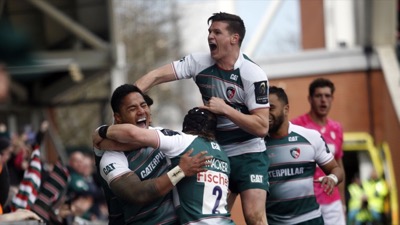
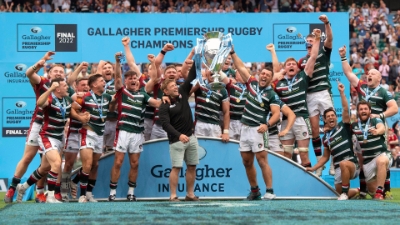
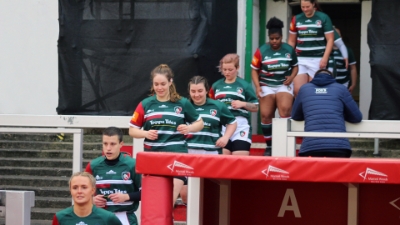
Borthwick’s team then became the first-ever to top the Premiership table through every week of the season in 2021/22 and won the title in dramatic fashion at Twickenham, the club’s first in nine years. At the same time, the club took the historic decision to launch a women’s team, with a place in the Championship North confirmed for the start of 2022/23.